Save the Date!
The LNI Fall Conference 2025
30th October – 2nd November 2025 in Mexico
Thank you to our hosts Sesma, Sesma and McNeese for what we are sure will be an excellent conference.


Save the Date!
The LNI Fall Conference 2025
30th October – 2nd November 2025 in Mexico
Thank you to our hosts Sesma, Sesma and McNeese for what we are sure will be an excellent conference.
Save the Date!
The LNI Spring Conference 2026
7th-9th May in Czech Republic.
Thank you to our hosts Petráš Rezek for what we are sure will be an excellent conference.
Brazilian member Azevedo Sette Advogados are pleased to announce André de Godoy Fernandes joins as a new partner in the M&A Corporate practice in their São Paulo office.
André has more than 25 years of experience in advising clients on complex transactions in mergers and acquisitions, joint ventures, foreign investment, contracts, and corporate matters, mainly for the technology, health and agribusiness sectors.
André is recommended in M&A and Corporate Law by Leaders League, The Legal 500, IFLR 1000, Best Lawyers, LL 250 e LACCA Approved as one of the most admired Brazilian lawyers in M&A and Corporate Law.
“Our new partner arrives to complement our M&A Corporate area, which today has 16 partners and a long and recognized presence in the market” affirmed senior partner, Luiz A. Sette.
For further details please see the full press release.
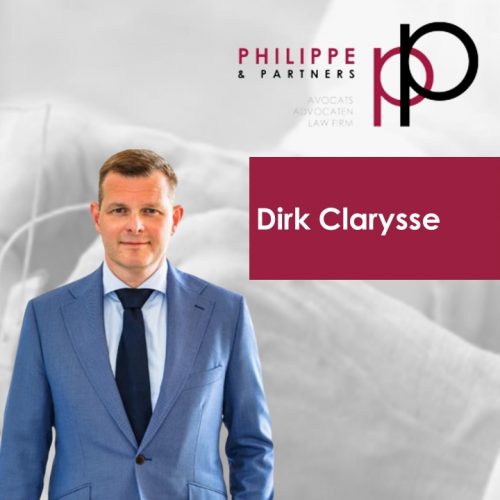
Our colleagues are mainly specialized in commercial law and mergers and acquisitions (M&A). As such, they provide legal advice and litigation support to companies at all stages of their existence, from incorporation to the transfer or termination of the business. Last year, Dirk and his team also published a book dedicated to the transfer of companies, with a practical dimension for both the seller and the buyer.
Partner Denis Philippe stated “We are delighted to welcome Dirk Clarysse. For many years, I have been able to appreciate his great qualities as a lawyer. His presence in Flanders, his reputation and his skills in corporate law in particular, are strategic assets for our firm. We share the same commitment to ethics and humanism. We are all reactive and proactive. Our firm is both close to the people through our presence in the different Belgian regions and also present internationally through our multilingual offices in Luxembourg, Paris, Dusseldorf and London. Great challenges and opportunities await us!”
Dirk Clarisse added: “I have known Denis for over 20 years. In the past, we were in the same firm, Denis as a partner and I as a trainee. From now on, we are joining forces! Our teams share common values: quality, of course, but also availability and a personal approach, as well as an ever greater desire to anticipate difficulties. The independence that characterizes both offices is also a shared value that led to the merger of the firms. Everything was in place for this “perfect match”.”
The process was complex and involved the transfer of shares, in-kind contributions, and sales of parts of the going concern of Chipita Bulgaria EAD.
This cross-border transaction BOYANOV & Co.’s team was involved in, won the 2021 Deal of the Year Award in Greece, during a ceremony organised by CEE Legal Matters and held in April 2022 in London.
The team was led by the Head of the M&A and Corporate Practice Groups Yordan Naydenov and included counsel Mihail Vishanin, and senior associates Nedyalka Novakova and Violeta Kirova. Click here for contact details.
The Handelsblatt’s list includes the lawyers in Germany who are recommended in their field of law. This selection is based on a comprehensive survey of lawyers by the specialist publisher “Best Lawyers”.
Honoured as “Best lawyers in Germany” were:
See SNP Schlawien to contact the team.
The transaction was structured as a sale of the respective parts of the going concerns of Yara Bulgaria EOOD and Yara Digital Romania SRL and was completed successfully earlier this month.
Boyanov & Co.’s team included Corporate and M&A Partner Yordan Naydenov, IP Partner Stela Sabeva, and Counsel Mihail Vishanin. For more details please contact Yordan Naydenov at Boyanov & Co.
There have been a lot of comments lately, both politically and in the media, regarding the activity of foreign agents, including foreign governments, engaged in what can be construed as political activism or political activities in the United States.
What can be done to increase the amount of current information about those activities and who is involved?
And how will such efforts apply to private parties, especially to the activities undertaken by law firms and other professional service businesses, on behalf of foreign clients?
First, a little history and context. Congress enacted the Foreign Agent Registration Act (“FARA”) in 1938 to require certain agents of foreign principals engaged in political activities in the U.S., especially activities supporting the Nazi government of Germany, to make public disclosures of their relationship(s) with their foreign principals. This included activities in furtherance of the principals’ goals and the receipts and disbursements related to supporting those activities. Those required disclosures enable the Department of Justice (“DOJ”) to evaluate the activities of registered foreign agents. (22 USC Section 611 et. seq. and 28 CFR Part 5). At its inception, the Act was administered by the Department of State. Since 1942 FARA has been administered by the FARA Unit of the Counterintelligence and Export Control Section in the National Security Division of DOJ.
The DOJ has an impressive enforcement toolbox under FARA, including criminal penalties (22 USC Section 618(a) and 18 USC Section 3571); civil enforcement, including injunctive relief (22 USC Section 618(f)); and restrictions applicable to public officials (18 USC Section 3571).
The DOJ provides detailed guidance on its website regarding the scope of its FARA authority, including but not limited to criminal penalties of no more than $250,000 or imprisonment for no more than five years on a conviction for willfully violating any provision of FARA or its related regulations. Those violations include any registration statement or supplement filed with or furnished to the DOJ under the provisions of FARA that contains any willful statement or omission of any material fact or willfully omits a copy of a material document necessary to make the included statements and documents not misleading. The DOJ considers any failure to file a registration statement or related supplements as required by FARA to be a continuing violation so long as that failure continues to exist, regardless of any contrary statute of limitations. (22 USC Section 618(e)).
One criminal complaint was filed in 2018 against Elena Alekseevna Khusyaynova, a Russian national, who was charged for her alleged role in a Russian conspiracy to interfere in the U.S. political system, specifically the 2016 Presidential and the 2018 midterm elections.
Allegations included conspiracy to defraud the United States by interfering, impairing, obstructing, and defeating the lawful functions of the DOJ to administer and enforce FARA. The charges were filed after she had returned to Russia. She has not yet been tried.
Similarly in 2018, Paul J. Manafort Jr., a former campaign manager for President Trump, pled guilty to multiple counts of conspiracy to violate FARA by failing to register and by providing false statements in a document filed with FARA, as well as to money laundering and conspiring to obstruct justice by witness tampering. His erstwhile associate, Richard Gates, also pled guilty to two counts: conspiracy to commit multiple offenses, including failure to register with FARA; and providing false statements, both in a document filed with FARA and in a statement made to the FBI. Gates and Manafort had lobbied on behalf of Ukraine without registering with FARA.
The Attorney General and the United States Attorney for the several federal districts can obtain injunctive relief available through the U.S. District Court if the DOJ determines that a person is engaged in or about to engage in any acts that constitute or may constitute a FARA violation. The scope of that relief applies to any agent of a foreign principal who fails to comply with FARA or its regulations, including both the right to apply for injunctive relief seeking to enjoin such acts and the ability to seek injunctive relief to bar such person from continuing to act as an agent for the foreign principal. (22 USC Section 618(f)). If the DOJ determines that registration is deficient, it will provide written notice to the registrant specifying the deficiencies; it is unlawful for the agent to act as an agent of the foreign principal at any time ten days or more after the receipt of the notice without filing an amended registration statement in full compliance with FARA. (22 USC Section 618(g)). For example, the DOJ used its authority under FARA in 2018 to order the state-run China Global Television Network to register as a foreign agent of the Chinese government.
In 2019, the U.S. law firm Skadden, Arps, Slate, Meagher & Flom LLP entered into a settlement agreement to resolve its liability for violations of FARA. According to the agreement, Skadden acted as an agent of the government of Ukraine by contributing to a public relations campaign directed at select members of the U.S. news media in 2012. In response to inquiries from the FARA Unit about Skadden’s role in that campaign, a then-partner made false and misleading statements to the FARA Unit. Those statements led the FARA Unit to conclude in 2013 that the law firm was not obligated to register. The facts, when later uncovered, showed that Skadden had been required to register in 2012. The firm then registered, admitted it made false and misleading statements in response to inquiries from the FARA Unit, disgorged over $4.6 million in fees, and agreed to maintain formal, robust procedures for responding to inquiries concerning its conduct from any federal government entity. Further, Skadden undertook to ensure that it would comply with FARA in connection with any future engagements on behalf of foreign clients.
The Skadden episode is a cautionary tale for all attorneys, but perhaps especially for BigLaw firms that may find themselves undone by acting in the US on behalf of a foreign client much the same as the firm would represent a US client in a domestic matter.
Most law firms know very well that they must abstain from certain foreign clients (i.e., those that raise concerns about money laundering, terrorism financing, etc.) or risk running afoul of the regulations of the Office of Foreign Asset Controls in the Department of State. An attorney should be similarly cautious about their legal responsibility when taking on a foreign client. Attorneys are used to representing clients from a position of professional distance and independence. Yet, if an attorney takes on a foreign client and represents that client both zealously and creatively, the attorney may him- or herself, become the subject of a distinct federal regulatory regime. So it is particularly important that attorneys assess at the outset, ideally before taking on foreign clients, whether representation will require the attorneys to register as foreign agents under FARA.
An exemption from registration is available under FARA for serving as an attorney for a foreign client.
But that exemption is more technical and narrower than might be expected. In one case, U.S. lawyers were to represent a foreign government in civil litigation in the U.S. and also to assist that government in public relations activities related to the litigation. When the lawyers sought reassurance from the DOJ that they need not register under FARA, they were told that representation in the litigation did not require them to register, but assistance with the related public relations activities did. There is a somewhat comparable exemption from registration available to other professional firms for “private and non-political activities” on behalf of a foreign client. But that has similarly proven to be relatively narrow and technical.
A consulting firm representing a foreign bank before U.S. bank regulatory agencies had to register, as did another consulting firm representing a foreign company before a U.S. agency.
A public official in any of the three branches of the U.S. government or in any agency of the federal government, including the District of Columbia, who is or who acts either as an agent of a foreign principal required to register under FARA (whether or not in fact registered), or as a lobbyist required to register under the Lobbying Disclosure Act of 1995 in connection with the representation of a foreign entity (as defined in Section 3(6) of that Act), is subject to fines of not more than $250,000, or imprisoned for not more than two years, or both. (18 USC Section 219l 18 USC Section 3571).
If one is to have foreign clients, one MUST determine whether that relationship will make one a “foreign agent” under FARA, and, if so, one MUST register.
If you have any questions about this post or any other related international business matters, please feel free to contact Robert C. Gabrielski or Peter D. Hutcheon at Norris McLaughlin
Everyone has a reasonable expectation of privacy concerning their private information, whether they are an adult or a child. However, there are certain cases when a child has a reasonable expectation of privacy where an adult does not.
Whilst not as widely reported as other privacy claims, children do bring claims for misuse of private information. However, in these circumstances because the claimant will be a child, any legal proceedings must operate under special rules and procedures. These are known as infant claims.
The Civil Procedure Rules (CPR), specifically CPR 21 and Practice Direction 21, set out the practice and procedure for civil claims brought where a child is a party. These requirements are designed to safeguard the child’s best interests as a protected party.
In this latest article, Hamlins provides insight into:
You can read the full article here.
The Hamlins Media Disputes team has considerable expertise in taking legal action under privacy and data protection laws and experience acting for children in privacy claims. If you would like to find out more about how Hamlins can help you, please get in touch.
It is our pleasure to announce that Our long-time colleague and associate, Peter Bartoš was made partner of Ružička and Partners on 1 May 2022.
Peter joined our office in 2013. He has 16 years’ experience as a legal practitioner under his belt, having worked on complex assignments that required knowledge spanning all areas of the law. His areas of focus include infrastructure projects, public procurement, state aid, and EU funds. In addition to intense project work, Peter has actively participated in the firm’s best practice initiative in public procurement, providing training and co-authoring of the large commentary to the Public Procurement Act published by C.H.Beck in October 2019.
“It is wonderful when one of our associates makes partner. Personally, I am all the more pleased with Peter’s achievement as he is one of my closest colleagues,” Ján Azud, Senior Partner of our law firm for infrastructure projects and public procurement expressed his pleasure.
Jaroslav Ružička, Managing Partner adds: “Firms are not made up solely of buildings or capital, rather, it’s the people that make a company. It is thus extremely important that people are provided space for self-realisation and personal and professional growth. I am very pleased to welcome a colleague of ours, who came aboard as a junior associate and is now joining the ranks of our partners. We are Ružička and Partners, and the word “partners” has now increased its significance.”
We would like to congratulate Peter and wish him many successful years as a partner of Ružička and Partners.