Legal Network International’s update on global IP and trade mark news from the member firms of the Legal Network International (LNI).
Download now


Legal Network International’s update on global IP and trade mark news from the member firms of the Legal Network International (LNI).
Download now
Scottish legal firm PBW Law has once again been recognised as a leader in Police Law in the prestigious Chambers UK 2026 directory.
For the third consecutive year, the firm has received a UK-wide ranking for Police Law: Mainly Defendant, reaffirming its position as the leading Scottish firm defending the rights of individual police officers.
The Chambers rankings recognise PBW Law’s continued excellence in representing police officers and related bodies in fatal accident inquiries, public inquiries, judicial review, criminal and civil litigation.
In addition, Professor Peter Watson, Senior Partner at PBW Law, has once again been individually ranked by Chambers for his outstanding expertise and leadership in the field. The firm also celebrates Pamela Rodgers who has been recognised as Up and Coming for the first time – an accolade highlighting her growing reputation and impact in the field.
Chambers and Partners, the independent legal research company behind the directory, is widely regarded as the definitive authority on law firm excellence, with rankings based on rigorous research and client feedback.
Clients praised PBW Law during the review process, commenting: “PBW Law’s lawyers are very hard-working and provide a quality service to those they represent. The staff are all exceptionally hard-working and motivated, and go the extra mile in all their cases.”
Another client noted: “Peter Watson is one of the most experienced and knowledgeable litigators in Scotland. He brings that depth of experience to every case he works on.”
Commenting on the latest ranking, Professor Peter Watson said: “We are honoured to be ranked once again by Chambers and Partners. This recognition reflects the consistent dedication, expertise, and commitment of our entire team to the clients we serve. I am especially delighted to see Pamela Rodgers’ talent recognised with an Up and Coming ranking – her contribution to our success is exceptional.”
Clients highlighted Pamela’s skill and focus during the research process, with one describing her as “… an excellent technical lawyer but equally has a strong commercial focus.”
Pamela Rodgers, Partner at PBW Law, said: “It’s incredibly rewarding to be recognised in the Chambers rankings for the first time. I’ve been fortunate to work alongside outstanding colleagues and clients on challenging and meaningful cases, and this recognition reflects that experience and support.”
Since 2015, Professor Watson has led PBW Law, based in Glasgow, transforming it into one of Scotland’s most successful boutique law firms. He was among the first lawyers in Scotland to qualify as a Solicitor Advocate and currently serves as President of the British Academy of Forensic Sciences (BAFS).
PBW Law is also proud to be the first Scottish member of Legal Network International (LNI), an alliance of independent, internationally focused law firms across 50 countries and 130 cities, dedicated to providing clients with seamless representation in cross-border matters.
In further positive news for the firm, Michael McKitrick has this month been promoted to Partner, strengthening PBW Law’s partnership team. At just 30 years old, he is one of the youngest lawyers in Scotland to achieve partnership, reflecting both his exceptional ability and the firm’s commitment to nurturing the next generation of legal talent.
See more articles from our member firm in Scotland, PBW Law.
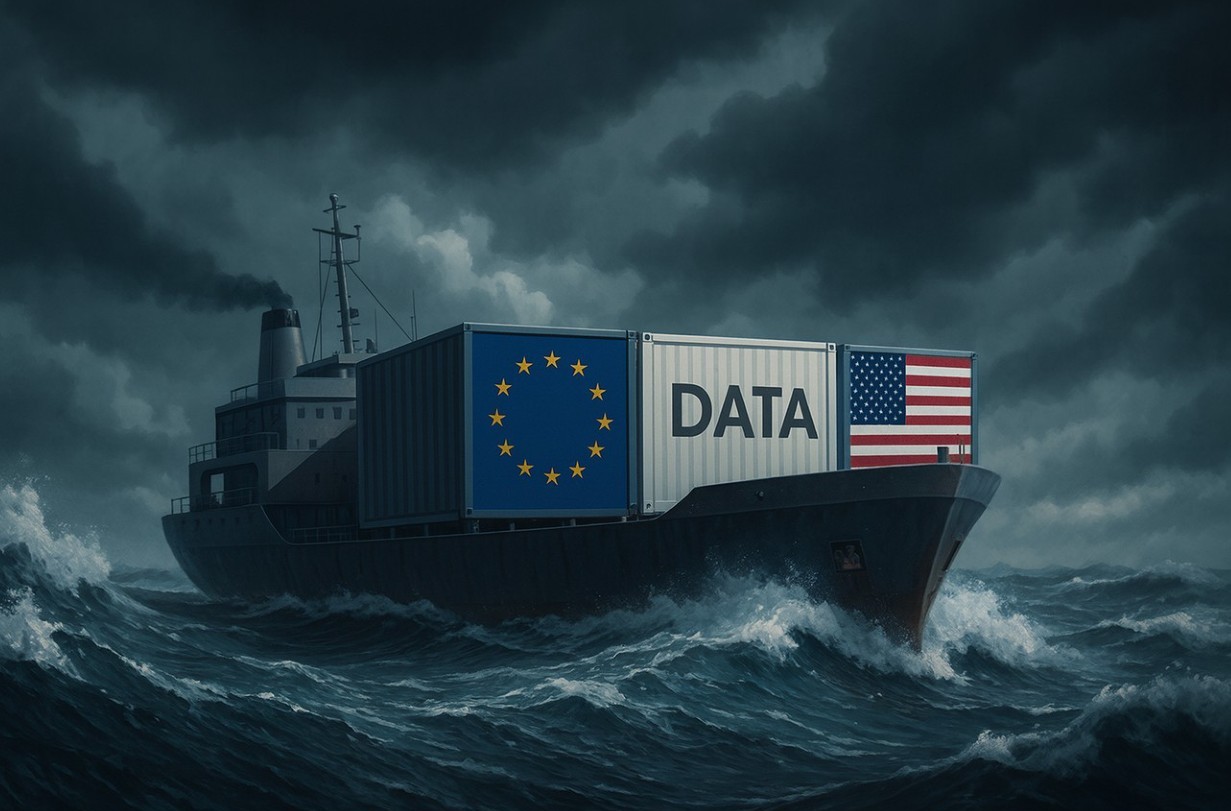
For the first time, an agreement between the EU and the US on the transfer of personal data has withstood judicial scrutiny by the European courts. The judgment in Latombe v. European Commission (General Court of the European Union, 3 September 2025) confirms that the EU–US Data Privacy Framework (DPF) ensures an adequate level of protection, as required under the EU’s General Data Protection Regulation (GDPR).
With the safeguards now in place under US law, European companies can continue to use American cloud and IT services with greater peace of mind. Or should caution still prevail?
Transfer of personal data between the EU and the US
Since 2018, the GDPR has aimed to guarantee a high and uniform level of data protection within the European Economic Area (EEA). However, many companies operate outside this area or do business with entities established abroad, resulting in the processing of personal data outside the EEA.
Such transfers are in principle only permitted where adequate data protection can be ensured through one of the mechanisms provided for under the GDPR. An adequacy decision adopted by the European Commission, declaring that a non-EEA country ensures an adequate level of protection, is one such mechanism.
Given their shared commercial interests, the EU and the United States have long sought to establish a regulatory framework that meets the stringent requirements of the GDPR. Yet repeated surveillance scandals and the lack of independent oversight in the US have proven major stumbling blocks.
The 2000 Safe Harbour Agreement was invalidated by the Court of Justice in its Schrems I judgment (2015), and the 2016 Privacy Shield met the same fate in its Schrems II judgment (2020). In both cases, the Court found that US intelligence services had overly broad powers and that EU citizens lacked sufficient judicial redress against disproportionate interference.
Following these rulings, negotiations resumed with the US to create a new framework that would comply with both the GDPR and the EU Charter of Fundamental Rights. This led to Commission Implementing Decision (EU) 2023/1795, which endorsed the EU–US Data Privacy Framework — a self-certification system under which US companies that have self-certified under the DPF must comply with the principles, rules and obligations governing the processing of personal data of individuals in the EEA.
The framework introduces new safeguards for the processing of personal data by US intelligence authorities and establishes the Data Protection Review Court (DPRC).
The case Latombe v. European Commission
Shortly after the DPF entered into force, French Member of the European Parliament Philippe Latombe brought an action before the General Court seeking annulment of the adequacy decision. He argued that the European Commission had exceeded its margin of discretion by determining that the United States ensured an adequate level of protection.
Latombe maintained that, even with the new guarantees introduced, the US legal system still failed to provide sufficient safeguards for key GDPR requirements — in particular with respect to (1) effective judicial redress, (2) interference by intelligence services, (3) automated decision-making, and (4) security of processing of personal data.
He further claimed that, in assessing the DPF, the Commission had failed to take adequate account of the Schrems I and Schrems II case-law, and that the new framework still suffered from essentially the same deficiencies.
The judgment of 3 September 2025
The General Court, however, dismissed all of Latombe’s pleas and upheld the validity of the DPF.
The Court held that the DPRC is functionally independent and protected from undue influence. Although its members are appointed and removed by the executive branch, they enjoy sufficient safeguards. The fact that the DPRC is not part of the judiciary is acceptable, as its guarantees are equivalent and its decisions are binding and final on the US government and intelligence agencies.
Latombe argued that US law still allows for intelligence agencies to collect personal data in bulk without prior judicial or administrative authorisation. The Court rejected this argument, finding that indiscriminate or mass collection of data is not permitted in the US. Bulk collection is allowed only when targeted collection is not feasible and must be limited, necessary and proportionate, subject to subsequent review by an independent body.
Unlike the GDPR, US law does not contain a general prohibition on purely automated decision-making without human intervention. The applicable rules differ across sectors and types of organisations. Nonetheless, the Court found that the US framework provides adequate protection, as the DPF imposes transparency obligations on organisations and grants individuals the right to request human review of an automated decision. In addition, oversight mechanisms are in place to handle complaints from individuals.
Whereas the GDPR imposes a general obligation to ensure the security of personal data, this obligation in the US applies only to organisations that have formally adhered to the DPF. The Court found that the Commission had sufficiently assessed whether the US certification system offers adequate protection. Since certified organisations are contractually bound to implement appropriate security measures and are subject to supervision by the US authorities, the Court held that an equivalent level of protection is ensured.
The Court consistently emphasised that the US system does not need to be identical to the GDPR, provided that the level of protection is “essentially equivalent” in practice. Although the DPF currently stands, its future remains uncertain, nonetheless.
In addition to a possible appeal that Latombe may bring against this judgment, several privacy-rights organisations — including NOYB (None of Your Business), founded by Max Schrems — have already announced their intention to challenge the DPF on broader grounds through both administrative and judicial channels.
Finally, adequacy decisions such as the DPF are subject to periodic review every four years. The first review will therefore take place by 2027 at the latest. The European Commission will then need to assess whether the US continues to uphold the promised safeguards. In today’s unpredictable political climate of trade tensions and shifting policies, that remains to be seen.
See more articles from our member firm in Belgium, Philippe & Partners.
The LNI Fall Conference 2025 brought our members together in vibrant Mexico City for three days of discussion, discovery, and connection. Hosted by Sesma, this year’s event reflected both the energy of Mexico and the collaborative spirit that defines Legal Network International.
A Warm Mexican Welcome
From Thursday’s impromptu lunch that introduced delegates to the heights of modern Mexican cuisine, to Saturday’s unforgettable gala dinner and fiesta, the hospitality from our hosts was exceptional. Every detail — from the venues to the cuisine — captured the warmth and generosity for which Mexico is known.
Insightful Conversations and Global Perspectives
The programme explored major forces shaping our firms and clients:
The programme was as rich in content as in setting. Friday’s sessions challenged us to look beyond borders – from ESG’s unexpected historical roots and future business opportunities, to the nuanced discussion on tariffs and the balance between regulation and growth. Saturday’s member-led sessions highlighted what makes LNI unique. Saturday showcased the best of LNI: members sharing their developments and innovations in the fields of AI, digitalisation, international sanctions and facilitating the management of family-owned businesses, and demonstrating that we are not only lawyers but innovators and entrepreneurs.
That spirit was celebrated in full during our Saturday night LNI Awards, recognising the energy, creativity, and commitment of our members.
Beck Rechtsanwälte were honoured for their strong presence at the conference and their consistent engagement across LNI activities.
JP Karsenty received recognition as the Best Contributors to Digital Marketing, with a special mention to Thomas Ricard and Pierre Trusson for their monthly IP updates.
Yuki Ichikawa of Sato Ichikawa travelled the furthest to join us — an impressive 11,300 kilometres from Japan!
Daniel Sens of Beck Rechtsanwälte was recognised as the Most Committed Younger Member, and Marius Stanciu and Victor Buju of Buju Stanciu jointly earned the title of Night Owls for keeping the spirit of LNI alive well into the evening.
Carlos Sesma Sr. of Sesma & Sesma was celebrated as an LNI Statesman, in recognition of his ongoing dedication to the network and his role in making the Mexico conference such a success.
Shared Values, Shared Success
Reflecting on the conference, Chairman Marc Gouden commented:
“Each conference reminds us why LNI matters — it’s not just about business opportunities, but about the trust and friendships that make collaboration possible. That’s what turns a network into a community.”
Looking Ahead
We now look forward to our next gathering in Prague, May 2026, hosted by Petráš Rezek. Another city, another opportunity to learn, connect, and celebrate what makes this network so special.